


The Federal Office of Civil Protection and Disaster Assistance (BBK) and the Federal Office for Information Security (BSI) recommend regular monitoring of fuel quality in emergency power systems.
Recommendations include:
- Annual fuel inspections
- Special attention to day tanks
- Installation of suitable sampling points
- Preferably use low-sulfur heating oil in accordance with DIN 51603-1
- Use additive packages for improved long-term storage stability
To support operators of emergency and backup power systems, both the BBK and BSI provide extensive technical guidance. The BBK publishes a comprehensive guide for the planning, implementation, and operation of emergency power supply systems in businesses and public institutions. The BSI complements these recommendations with its publication: “New Findings on the Storage Stability of Fuels for Emergency Power Systems”. This publication presents current findings on fuel aging and long-term storage behavior. Both documents provide valuable background information and practical recommendations for operators of emergency power systems.
Leading Manufacturers Support the Use of Long-Term Stable Fuels
The operational reliability of emergency power systems depends not only on the equipment itself but also on the quality of the stored fuel.
Extensive studies have demonstrated that long-term stable fuels make a significant contribution to secure and reliable energy supply. For many applications, manufacturers explicitly recommend the use of appropriately qualified fuels.
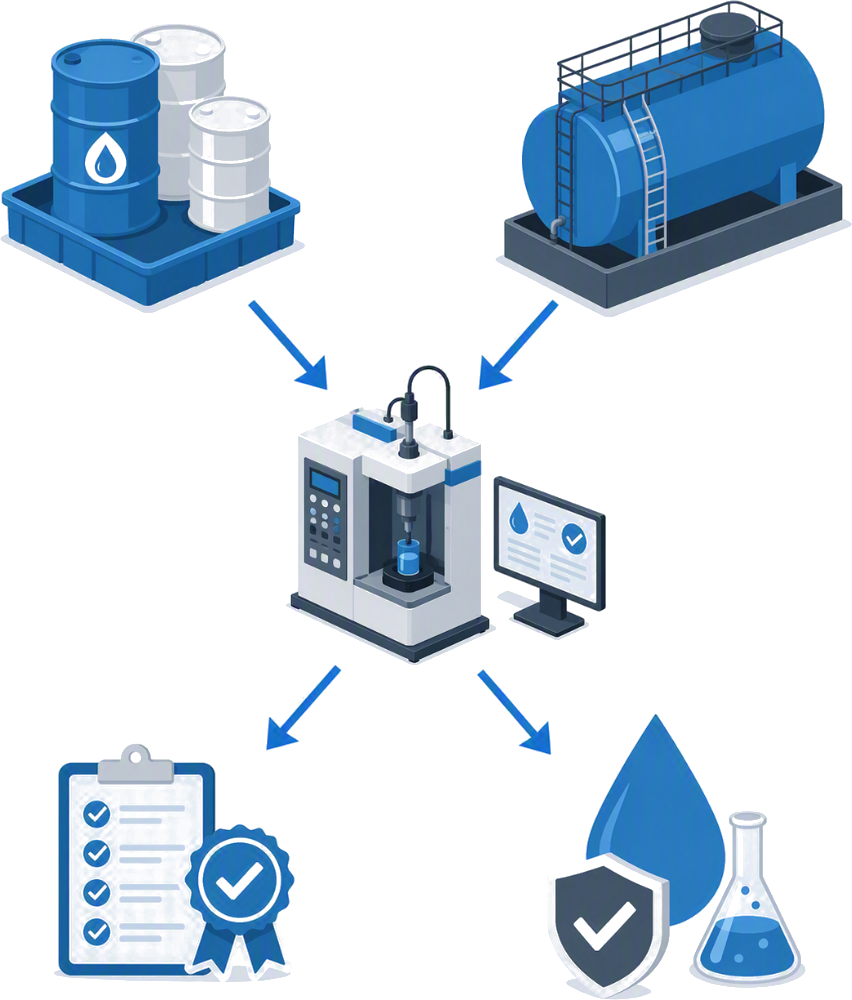
Regular inspections and early detection of quality issues help effectively prevent fuel-related malfunctions and system failures.
Current approvals and technical bulletins issued by leading engine manufacturers are based on comprehensive studies regarding the storage stability of fuels in emergency power systems.
A study initiated in 2014 by the Institute for Heat and Oil Technology (IWO) revealed for the first time that the operational readiness of more than 80% of the investigated emergency power systems could not be fully guaranteed due to fuel-related issues. The primary causes identified were the lack of fuel quality monitoring, limited long-term stability of biodiesel-containing diesel fuels and fuel-aging installation components such as copper piping.
The findings led several manufacturers to revise their fuel recommendations and explicitly approve or recommend the use of low-sulfur, long-term stable fuels.
Request Detailed Study Results
The complete study contains detailed test results and proven best-practice recommendations for fuel storage and quality monitoring in emergency power systems. Request the study by e-mail