Instructions and Safety Information for Sampling and Shipping
The following sampling and shipment instructions, as well as the safety information, contain important guidance that must be observed as part of the Fuel Check process.
Working on, maintaining, repairing, or operating an emergency power system is a highly responsible task. Such a system must function reliably in an emergency situation. Just as the system requires careful maintenance, oil changes, and routine test runs, the sampling procedure described below must also be carried out with the greatest care.
Fuel in emergency power systems is often stored for years. However, fuels also age over time. The fuel sample you collect will be analyzed by TEC4FUELS and assessed with regard to its quality.
Service Kit
For sampling, we have provided you with a service kit containing the following items. Please first check that the kit is complete:
- 1 shipping box including hazardous goods label
- 1 sample information sheet and 1 tank code label for each tank and container
- 1 plastic container (2 liters) with safety cap for each tank
- 1 sampling hose with hand pump for each tank
- 1 pair of protective gloves
- 1 cleaning cloth
- 3 resealable plastic bags
Please verify in advance that the labels correspond to the tank codes listed on the sample information sheet.
WARNING: Use this service kit only for sampling diesel fuel or light heating oil.
Sampling Procedure

1.
Carefully read these instructions and the safety information below.
2.
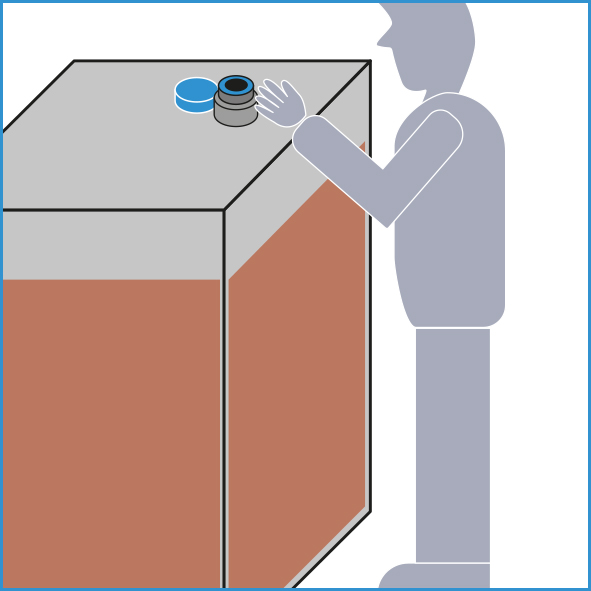
Open the tank at a suitable access point, such as the filling port or inspection opening.
3.
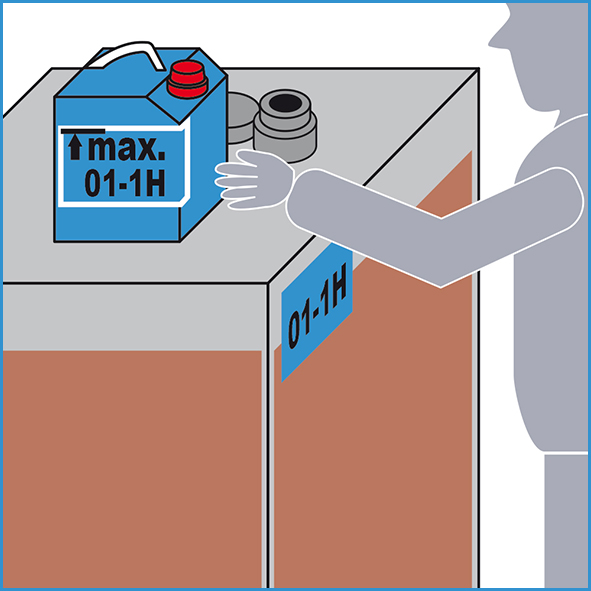
Attach the labels to the corresponding sample container and tank. Place the opened container securely near the sampling point.
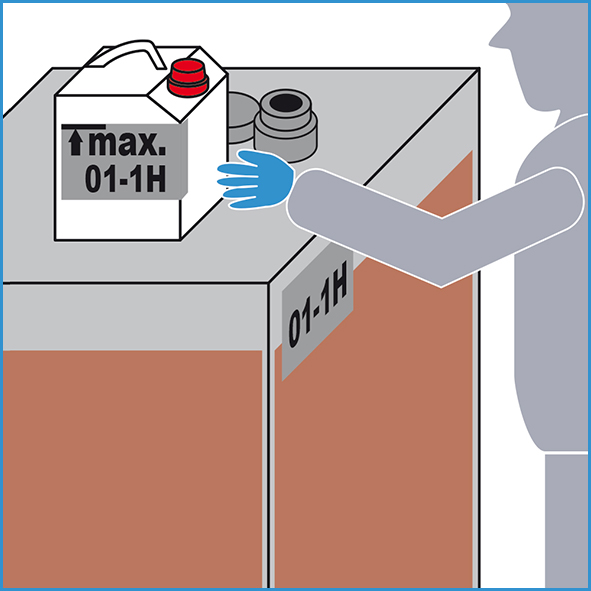
4.
Put on the protective gloves and insert the long end of the hose into the tank so that the sample is taken from the middle to lower section whenever possible.
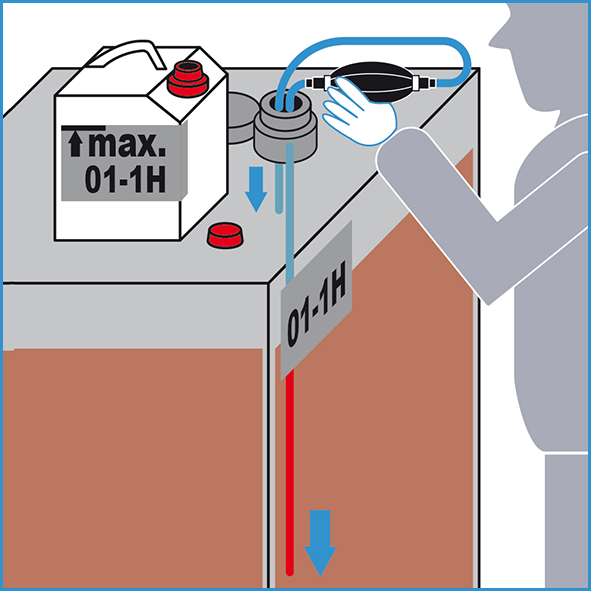
5.
Use a new, unused hand pump for each tank to prevent contamination and inaccurate results.
Before collecting the sample, flush the pump and hose by pumping the fuel back into the tank with at least 20 pump strokes.
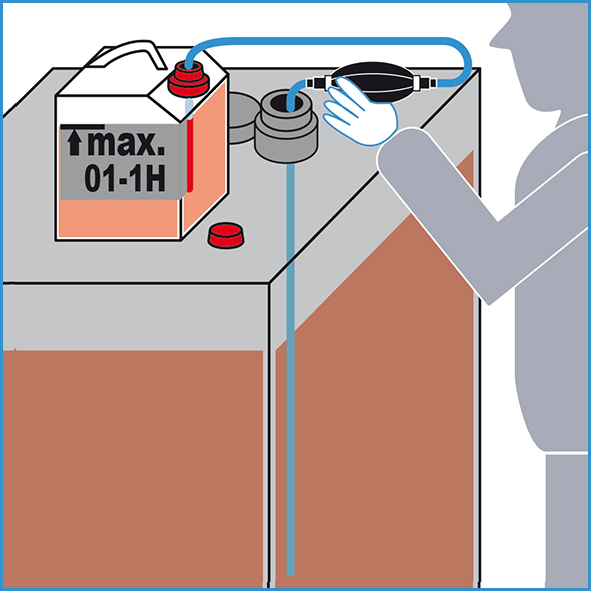
6.
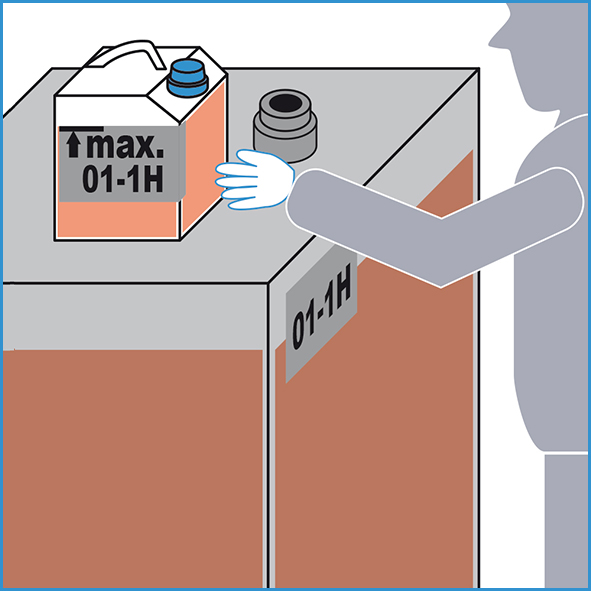
Only then pump fuel into the sample container until you reach the “max.” filling mark.
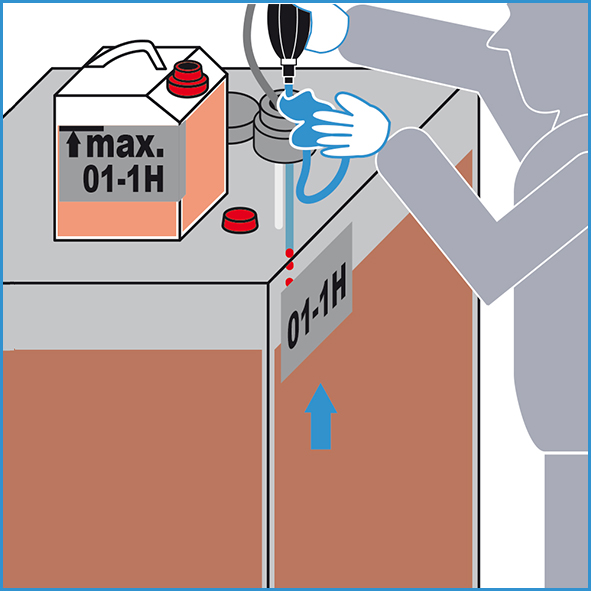
7.
Once the container is filled, hold the short hose end over the tank opening and slowly pull the long hose out of the tank through the cleaning cloth.
Empty the pump and hose by pumping the remaining fuel back into the tank until no more fuel is discharged. Allow any residual fuel in the hose to drain back into the tank before removing it completely.
8.
Carefully close the container until the safety ring locks into place and the container is tightly sealed. Remove any fuel residue from the outside of the container.

9.
Close the tank opening securely.
Sampling Procedure
1. Carefully read these instructions and the safety information below.
2. Open the tank at a suitable access point, such as the filling port or inspection opening.
3. Attach the labels to the corresponding sample container and tank. Place the opened container securely near the sampling point.
4. Put on the protective gloves and insert the long end of the hose into the tank so that the sample is taken from the middle to lower section whenever possible.
5. Use a new, unused hand pump for each tank to prevent contamination and inaccurate results.
Before collecting the sample, flush the pump and hose by pumping the fuel back into the tank with at least 20 pump strokes.
6. Only then pump fuel into the sample container until you reach the “max.” filling mark.
7. Once the container is filled, hold the short hose end over the tank opening and slowly pull the long hose out of the tank through the cleaning cloth.
Empty the pump and hose by pumping the remaining fuel back into the tank until no more fuel is discharged. Allow any residual fuel in the hose to drain back into the tank before removing it completely.
8. Carefully close the container until the safety ring locks into place and the container is tightly sealed. Remove any fuel residue from the outside of the container.
9. Close the tank opening securely.
Documentation
Please make sure to complete the Tank System Information Sheet for the sample.
Verify that the container labels correspond to the assigned tank code.
Send the completed documentation by e-mail to Kraftstoffcheck@tec4fuels.com
Shipping
1.
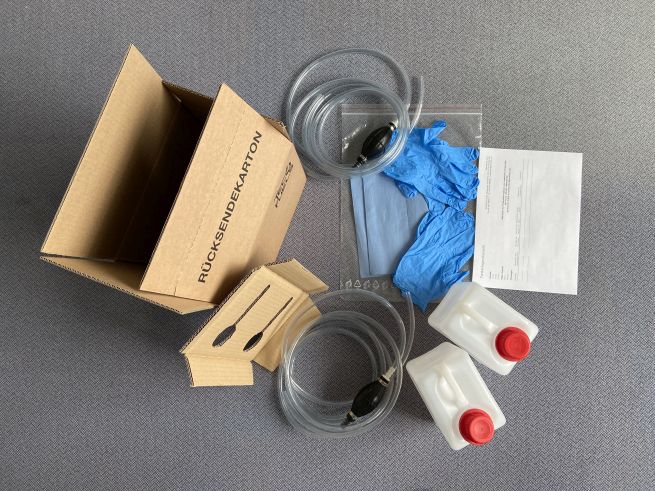
This image shows the complete contents of the service kit. Please verify that all listed components are included.
2.
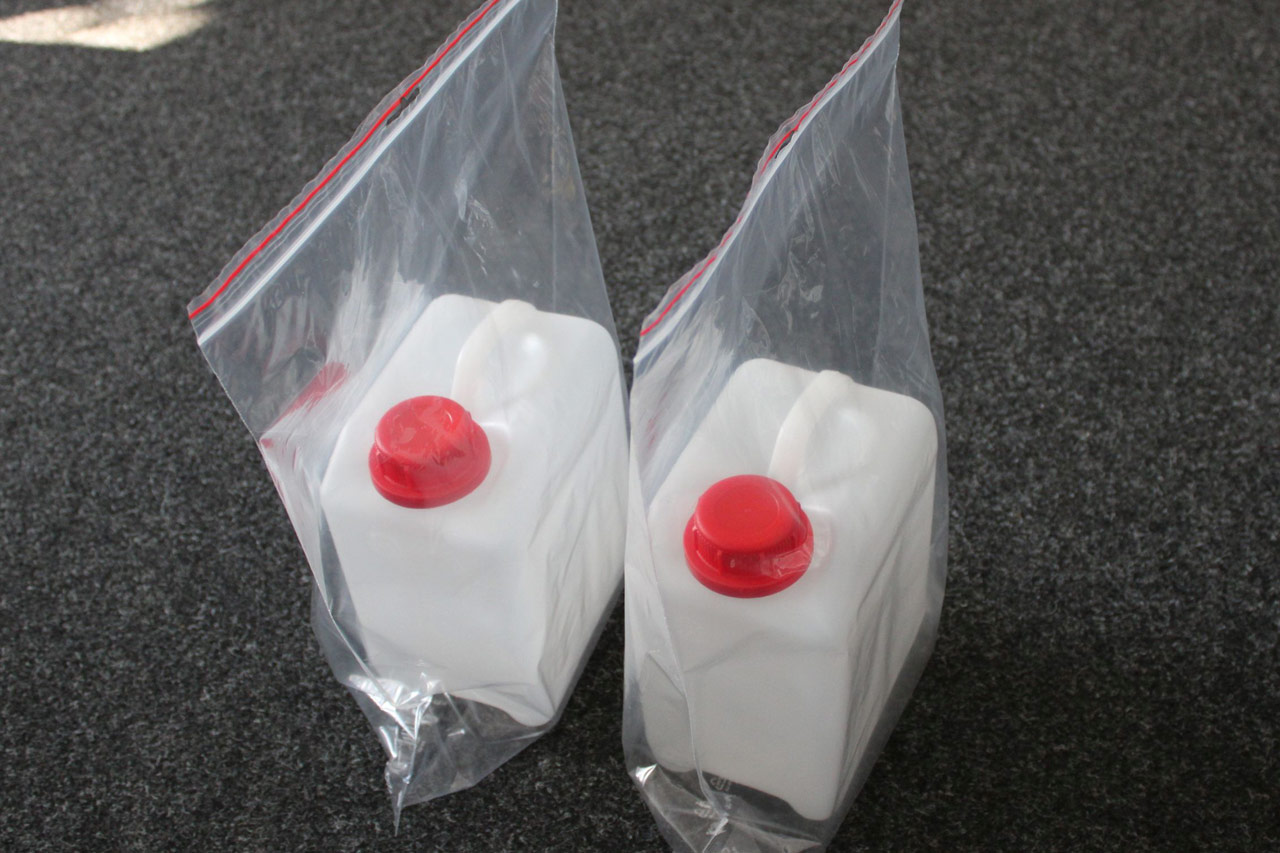
Place each filled and correctly labeled sample container into a zip-seal bag and close it carefully.
3.
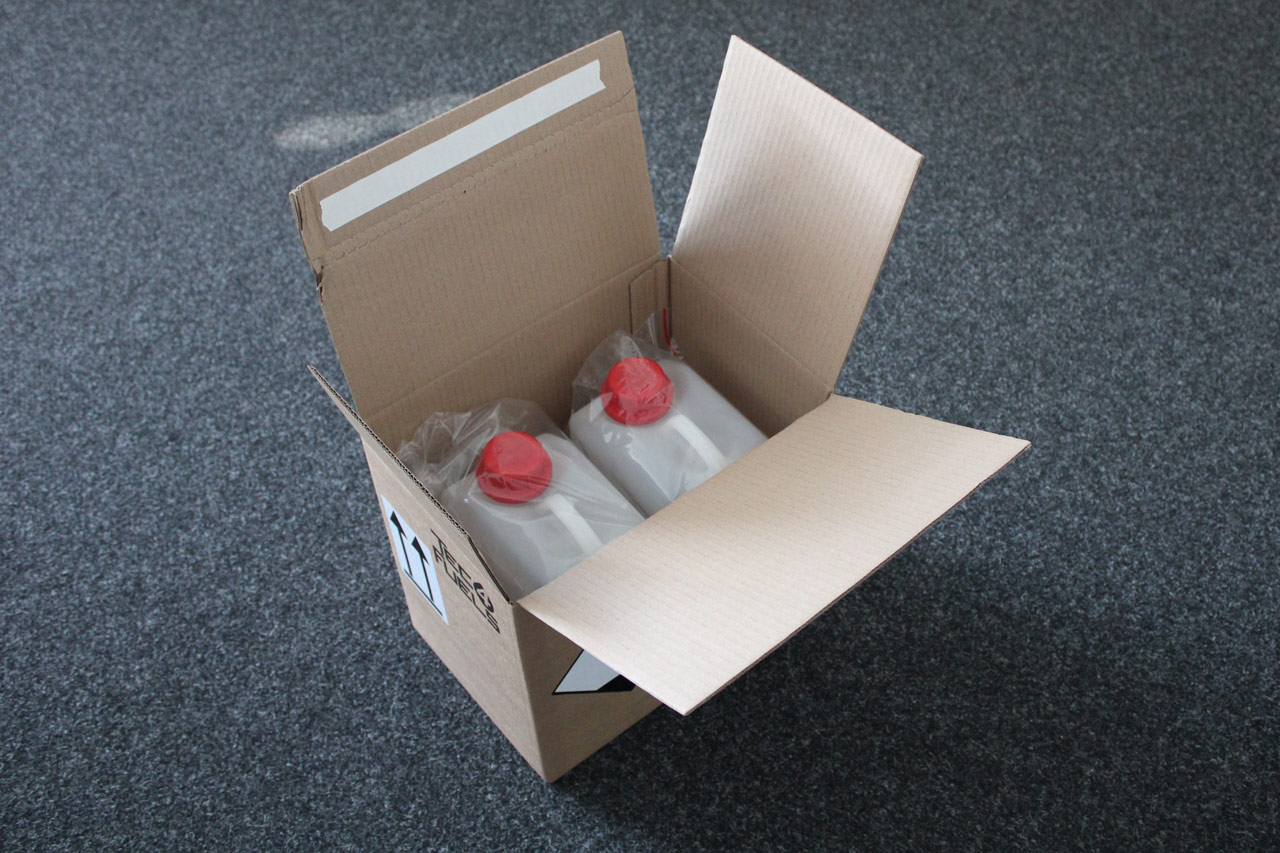
Place the container(s) into the return shipping box. Ensure that the container remains upright and follows the arrow markings on the box.
4.
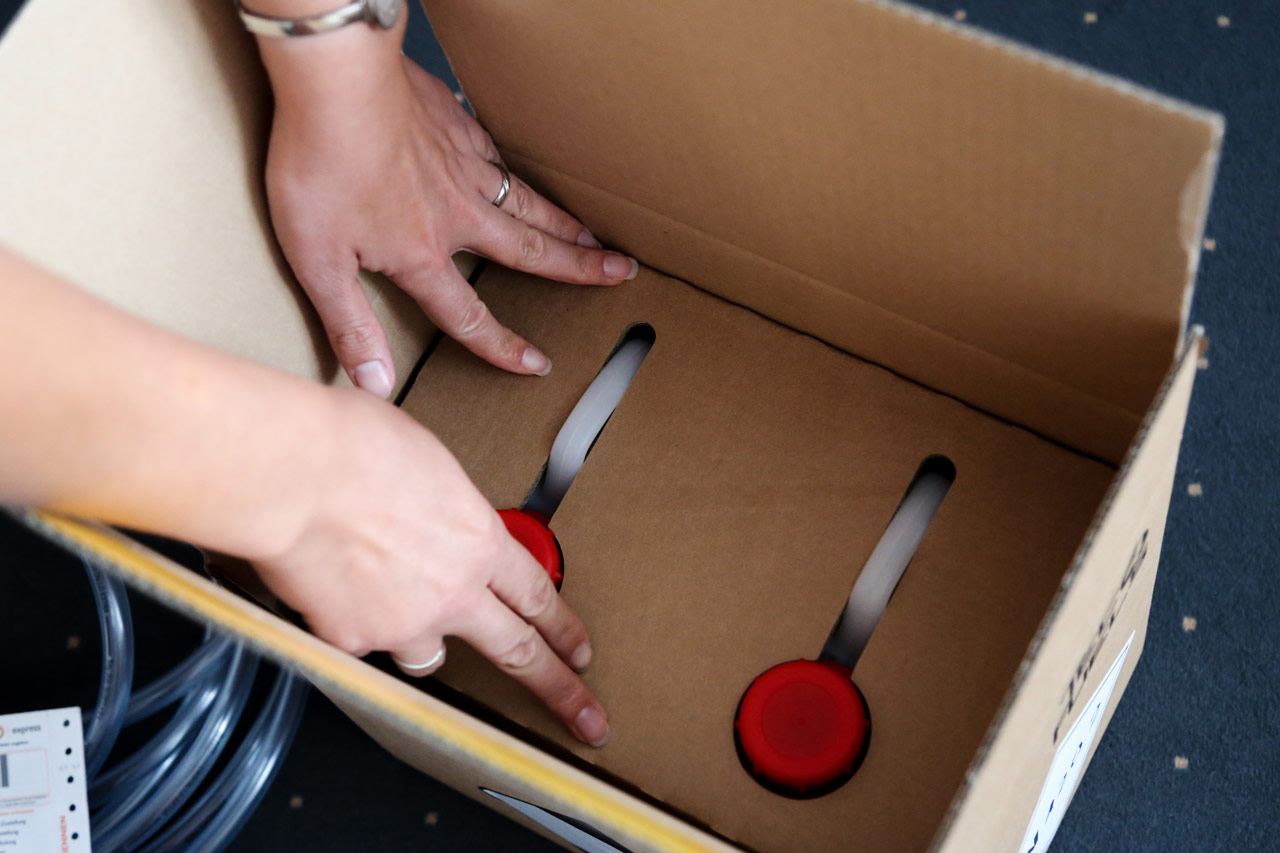
Place the supplied die-cut cardboard insert over the containers and press it gently into position so that they are securely covered.
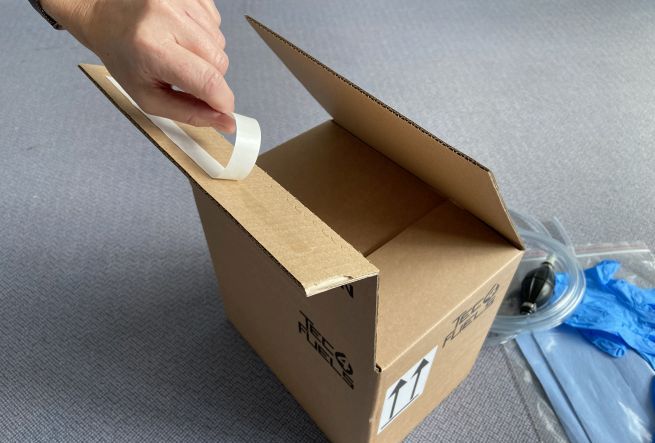
5.
The inside of the box lid contains an adhesive strip that can be used to seal the box.
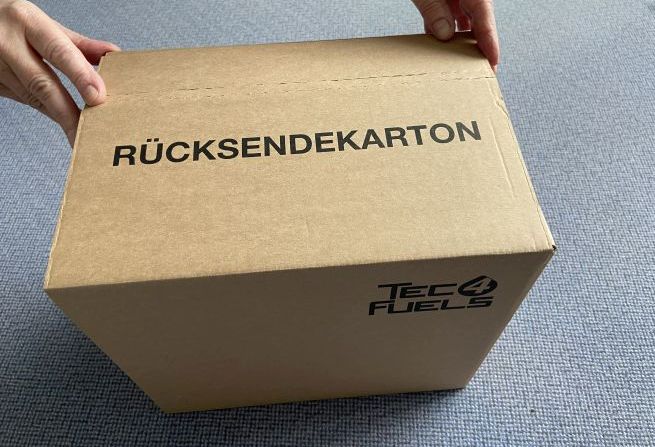
6.
Seal the box carefully using the adhesive strip.
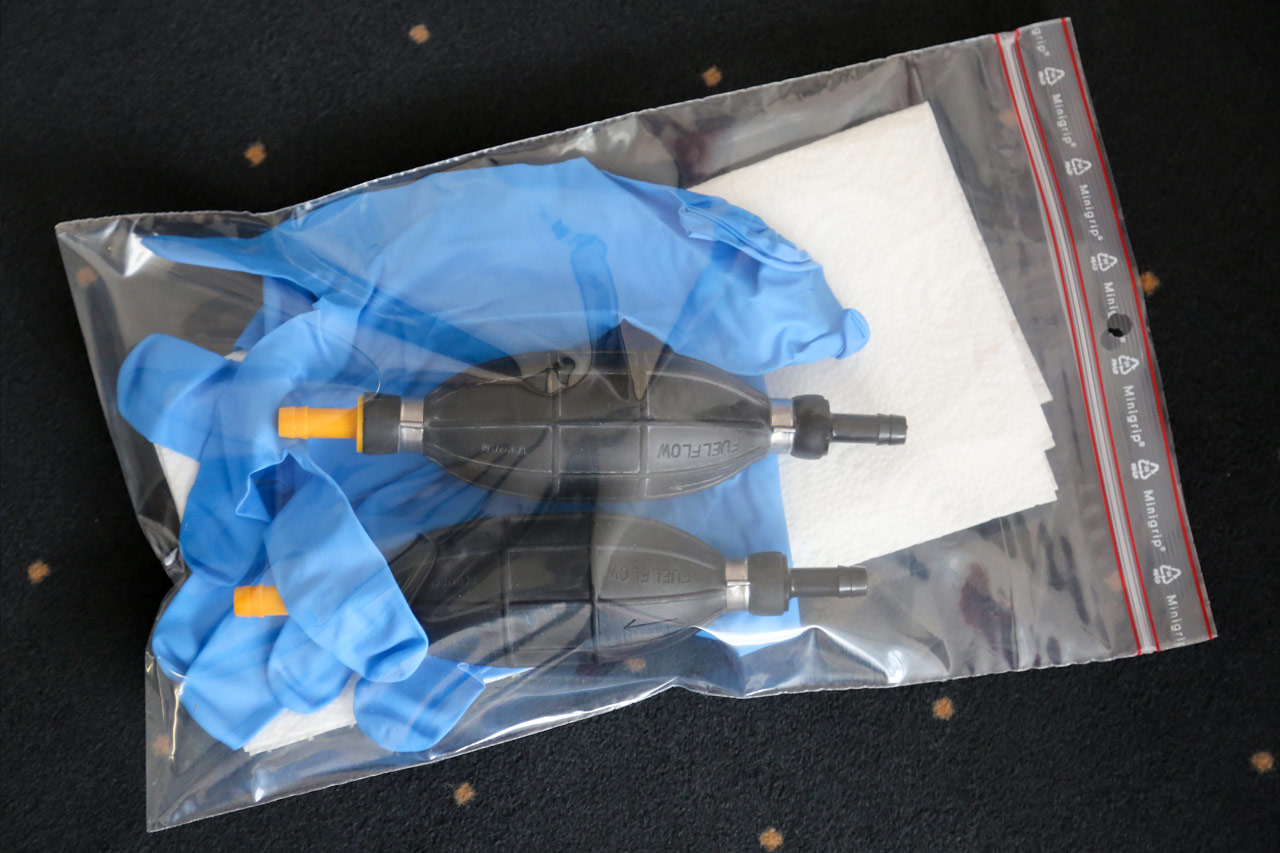
7.
Place the pumps, hoses, and cleaning cloth in the resealable plastic bag and dispose of them through an appropriate hazardous waste disposal service.
Shipment is arranged via GO! Express & Logistics. The package is sent directly to the GMA analytical laboratory in Frankfurt, not to TEC4FUELS. Once the package is ready for shipment, please contact: Kraftstoffcheck@tec4fuels.com. Please provide the collection address, preferred collection date and collection time window. We will arrange the collection on your behalf.
Shipping
1. This image shows the complete contents of the service kit. Please verify that all listed components are included.
2. Place each filled and correctly labeled sample container into a zip-seal bag and close it carefully.
3. Place the container(s) into the return shipping box. Ensure that the container remains upright and follows the arrow markings on the box.
4. Place the supplied die-cut cardboard insert over the containers and press it gently into position so that they are securely covered.
5. The inside of the box lid contains an adhesive strip that can be used to seal the box.
6. Seal the box carefully using the adhesive strip.
7. Place the pumps, hoses, and cleaning cloth in the resealable plastic bag and dispose of them through an appropriate hazardous waste disposal service.
Shipment is arranged via GO! Express & Logistics. The package is sent directly to the GMA analytical laboratory in Frankfurt, not to TEC4FUELS. Once the package is ready for shipment, please contact: Kraftstoffcheck@tec4fuels.com. Please provide the collection address. preferred collection date and collection time window. We will arrange the collection on your behalf.
Safety Instructions for Sampling Fuels from Emergency Power Systems
Use Personal Protective Equipment
Please wear suitable protective clothing while performing sampling activities. Recommended protective equipment includes safety shoes or boots, safety goggles with side protection if splashing is possible and gloves suitable for protection against aromatic hydrocarbons.
Technical Safety Measures
Do not use a mobile phone during sampling.
Keep samples away from ignition sources such as open flames and sparks, as well as heat sources such as hot pipes or surfaces.
NO SMOKING! NO OPEN FLAMES!
During Sampling
Do not eat, drink, or smoke while sampling.
Avoid contact with skin, eyes, and clothing. Do not place fuel-soaked cloths in your workwear pockets.
Wash your hands before breaks and immediately after handling fuel. Wash fuel from your skin with soap and water. Remove contaminated clothing and footwear.
Inspect gloves regularly and replace them if damaged, worn, or contaminated.
KEEP AWAY FROM FOOD, BEVERAGES, AND ANIMAL FEED.
Ensure adequate ventilation.
When working in enclosed spaces such as tanks or containers, verify beforehand that a breathable atmosphere is present.
Fuel vapors may form explosive mixtures with air.
Do not smoke. Avoid inhaling vapors or mist. Avoid contact of fuel with skin, eyes, and clothing.
NEVER START A SIPHON BY MOUTH.
Avoid the formation of vapors, mists, or aerosols.
Do not use compressed air for filling, emptying, or handling fuel.
If an Accident Occurs
Eye Contact
May cause mild irritation.
Rinse eyes thoroughly with plenty of water, including under the eyelids. Remove contact lenses if present and continue rinsing. If irritation persists, seek medical attention.
Skin Contact
Diesel fuel and heating oil may cause skin irritation or dermatitis.
Wash affected skin thoroughly with soap and water. Seek medical advice if irritation persists.
Ingestion of Diesel Fuel or Heating Oil
DO NOT induce vomiting, as there is a significant risk of aspiration.
Fuel entering the lungs can cause serious injury.
Do not give the affected person anything to drink.
Take the person to a hospital immediately. Do not wait for symptoms to develop.
Call emergency services immediately (112)!