
What Is ATES?
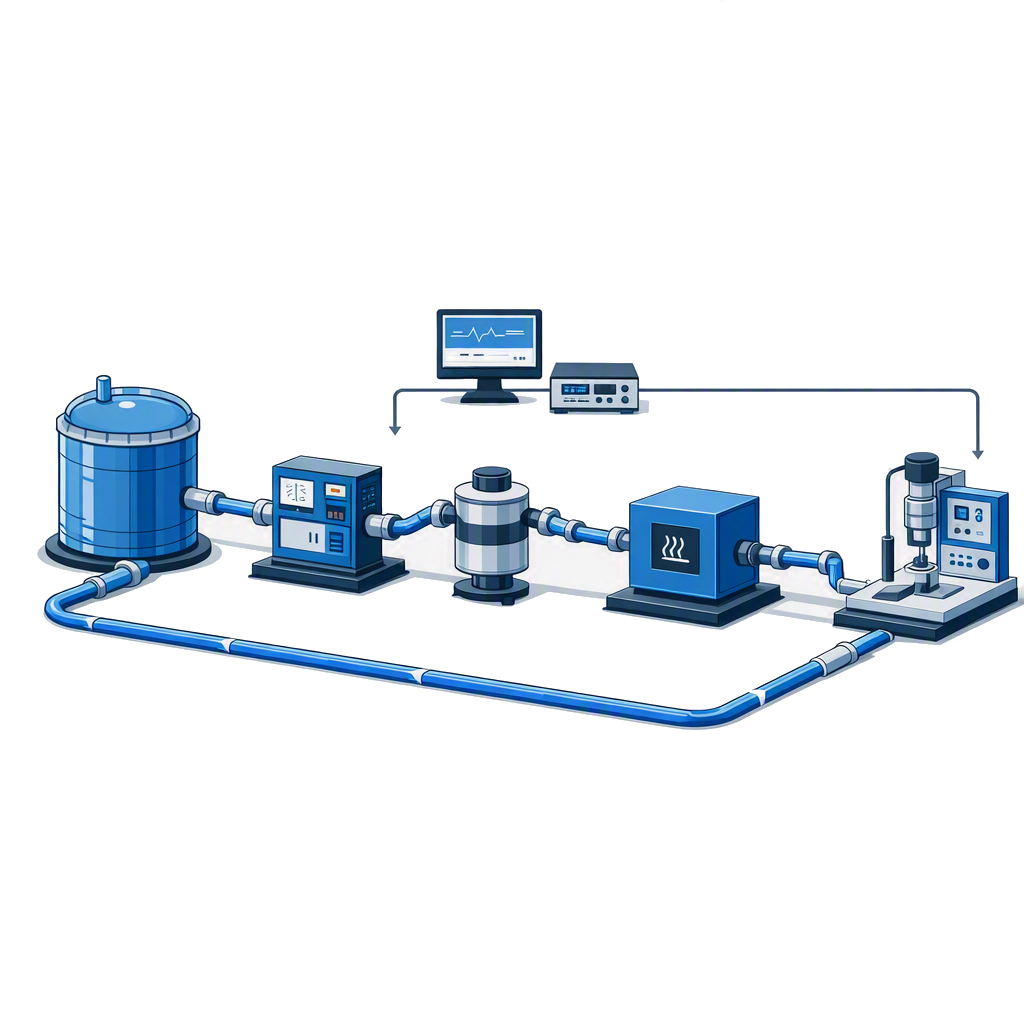
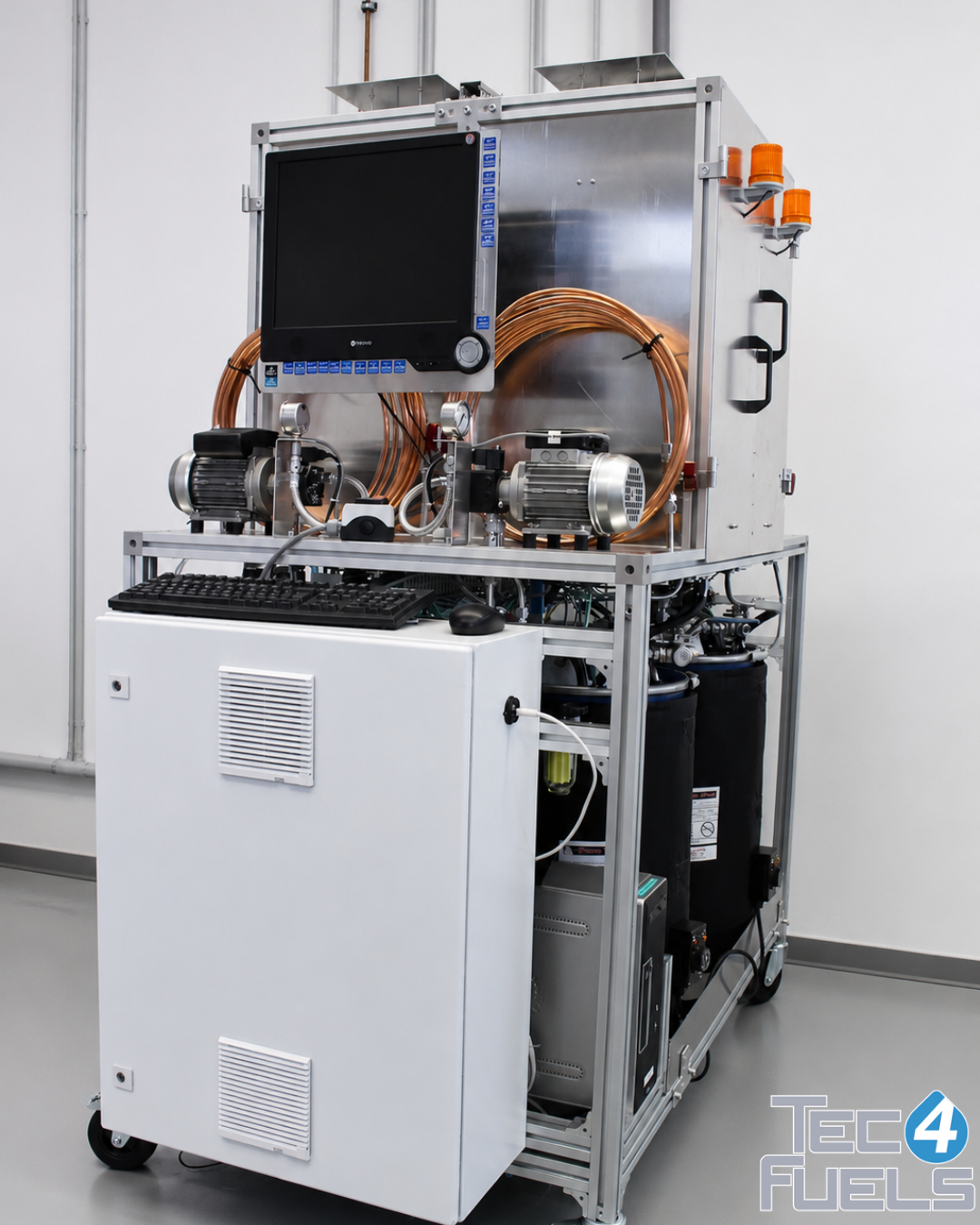
ATES is based on a Hardware-in-the-Loop concept. Fuels are continuously circulated through real components such as filters, pumps, preheaters, and nozzles. The fuel is not combusted but continuously reused throughout the test process.
This allows real-world aging and stress mechanisms to be replicated while assessing interactions between fuels and components.
Why ATES?
Standardized fuel tests provide information about fuel quality at the time of analysis. However, they often provide only limited insight into how a fuel behaves during storage and operation.
ATES enables investigations into:
- Storage stability
- Fuel aging
- Component compatibility
- Additive effectiveness
- Blend compatibility
- System behavior under load
What Questions Does ATES Answer?
How does a fuel behave during operation?
Investigation of different operating conditions and load scenarios.
How effective are additives?
Assessment of stabilizers and other additive systems and their performance.
How do fuels affect technical components?
Analysis of filters, pumps, preheaters, nozzles, and other components under realistic operating conditions.
How do different fuel blends perform?
Direct comparison of different fuels and blending formulations under identical conditions.

Our Services
Component Qualification
Evaluation and qualification of components under realistic operating conditions. By testing filters, pumps, preheaters, nozzles, and additional system components, potential weaknesses can be identified early and reliable statements about operational safety can be made.
Fuel and Blend Testing
Comparison of fuels, fuel blends, and alternative formulation components with regard to their behavior under defined operating conditions. These tests provide reliable insights into stability, compatibility, and performance.
Additive Evaluation
Assessment of additives designed to improve fuel quality, storage stability, and operational reliability. Testing focuses on the influence of additives on aging behavior and overall system performance.
Application-Oriented Long-Term Testing
Investigation of fuels and components under realistic operating conditions over extended periods. This makes it possible to identify aging effects, deposit formation, and potential failure mechanisms during the development phase.
Technical Reports and Expert Assessments
Documentation and evaluation of test results through comprehensive reports, technical statements, and expert assessments. These results provide a solid basis for development decisions, product approvals, and investment planning.

FAQ: ATES
Which Products Can Be Evaluated with ATES?
ATES is suitable for middle distillates such as diesel fuel, heating oil, and kerosene, as well as alternative fuels, fuel blends, additives, and technical components.
What Are the Benefits of the Hardware-in-the-Loop Approach?
Real components are operated under controlled conditions, enabling reliable conclusions about their actual behavior within a complete system and under application-relevant operating conditions.
Which Operating Conditions Can Be Simulated?
ATES allows the investigation of a wide range of influencing factors, including temperature variations, oxygen exposure, light-induced aging, water phases and contamination, pressure conditions, as well as different operating and load profiles.
What Results Does ATES Deliver?
ATES provides valuable insights into fuel aging behavior, component compatibility, additive performance, long-term operational reliability, and the interactions between fuels and technical systems under realistic conditions.