Testing of Super E20 at German filling stations
Compliant options
October 10, 2024 – Increasing the proportion of ethanol in petrol, for example Super E20, could be an option for reducing greenhouse gas emissions. Although there is currently no valid standard for fuel with more than 10% and up to 50% ethanol, it is still permitted to be sold at filling stations for research and testing purposes. To do so, operators must comply with a number of regulations and fulfill certain requirements.
Petrol fuels approved for general trade in Germany must comply with DIN EN 228 (E5, E10) or DIN EN 15293 (E85). E10plus fuels with an ethanol content of more than 10% by volume up to 50% by volume do not comply with these standards. In particular, they differ from the main fuel types E5 and E10 in that their oxygen content exceeds their limit value of 3.7% by weight. However, current activities by the European Committee for Standardization (Comité Européen de Normalisation, CEN) indicate that fuel with a maximum bioethanol blend of 20% could be included in a standard for petrol, thus paving the way for approval of the fuel in Europe, and
therefore also in Germany, could be paved. For fuels with a maximum of 20% by volume ethanol (E20), official manufacturer approvals already exist for parts of the vehicle fleet currently registered in Germany. In October 2023, a petrol pump at a filling station in Mannheim was rededicated to dispensing Super E20 fuel for research and testing purposes. The filling station operator and the involved vehicle fleets and automotive industry are testing Super E20 as a fuel as part of a field trial. The knowledge gained from this is to be incorporated into the standardization process for E20 fuels.
Exemption regulation in the 10th BImSchV
In Germany, the 10th Ordinance of the Federal Immission Control Act (BImSchV) regulates which fuels may be placed on the market. The legislator has deliberately created exceptions for the placing on the market or transfer of fuels to third parties that deviate from the usual pattern of specifications and still have to undergo the standardization process. They may be supplied for research and testing purposes for a limited period to a limited user group (§ 16 (Exceptions), paragraphs 1 and 2 of the 10th BImSchV).
The user group must be restricted by suitable measures, such as a fuel card or a lock on the pump, to prevent incorrect fueling of vehicles by unauthorized users. The sale of E10plus fuel must be reported to the authority responsible for the filling station. For any inspections, evidence may need to be provided that the sale of E10plus complies with the applicable regulations in water law, building supervision, industrial safety regulations, and the EC Machinery Directive. When preparing this evidence, cooperation with the approved monitoring body (ZÜS) responsible for the filling station is recommended.
Ethanol must not enter the separator
Safety-related and wastewater-related requirements, among others, must be observed. With regard to fire and explosion protection, investigations by the Physikalisch-Technische Bundesanstalt show no concerns about the use of bioethanol at filling stations, provided that the ethanol content in the fuel does not exceed 60% by volume.
Section 62 of the Water Resources Act (WHG) formulates requirements for handling water-polluting substances, which also apply to filling stations and private refueling stations.

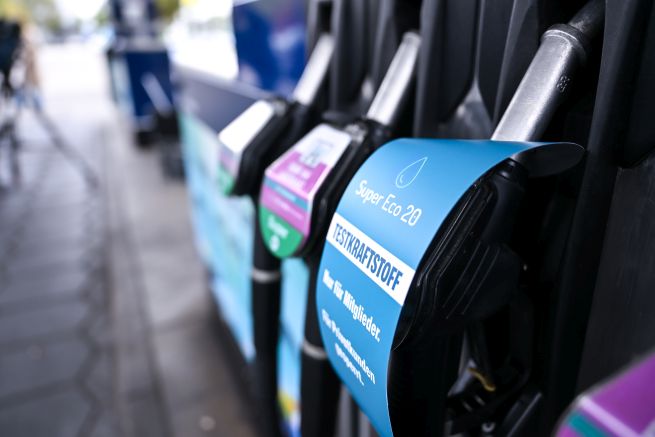
Super E20 fuel may currently only be dispensed to a closed user group. Photo: Teresa Kröger
Accordingly, filling stations must comply with generally accepted technical rules and be constructed, maintained, operated, and decommissioned in such a way that contamination of water bodies is prevented. The requirements of the WHG are further elaborated in the nationwide Ordinance on Facilities for Handling Water-Polluting Substances (AwSV). According to § 17 paragraph 1 AwSV, this includes the planning of filling stations and, in application of § 24 paragraph 3 AwSV, their repair. These requirements are specified by the Technical Rules for Water-Polluting Substances (TRwS) of the German Association for Water, Wastewater and Waste (DWA).
Since there is currently no reliable data on the harmlessness of discharging leaked E10plus fuels into the wastewater of filling stations, TRwS 781 generally excludes discharge via light liquid separators at filling stations. The concern of TRwS 781 is not the leakage of dripping quantities during vehicle refueling, which is to be classified as rather harmless. The focus is primarily on possible accidents during the refueling of storage tanks by tank trucks, where potentially larger quantities of fuel could leak and enter the wastewater.
As an alternative option to the light liquid separator, TRwS 781 offers the discharge of wastewater into an underground collection room that has no connection to the sewage system and must be emptied by an approved specialist company if necessary. Since few public filling stations are likely to have such a collection room, most are left with the other option provided by TRwS 781 for retaining leaking E10plus fuel quantities on the filling area of the filling station. A number of conditions must be met for this.
Definition of hose system for delivery
The method of retaining E10plus fuels at the filling station affects the options for delivery by tanker truck. In the case of retention on the filling area, TRwS 781 generally excludes the use of a 3″ filling hose with tanker coupling, which is common for refueling. Alternatively, TRwS 781 defines various hose systems with which a tanker truck may deliver E10plus fuel. Among the available options, the “one-piece 2″ filling hose with dry couplings at both hose ends” has proven to be practical in a test refueling.

Test run for refueling a storage tank, where a filling hose with dry coupling was connected to a tanker truck with a TW coupling using an adapter. Photo: EDi Hohenlohe
For delivery, the floor drains on the filling area must be suitably covered so that the fuel cannot enter the light liquid separator. Cover cushions, as are usually carried in tanker trucks, are sufficient for this, because TRwS 781 assumes that no accident can occur with the hose systems defined therein and that cover cushions are suitable for collecting dripping quantities.
Check material compatibility with E10plus
The physicochemical properties of bioethanol-containing fuels differ from those of purely fossil fuels depending on the respective bioethanol blend rate. Therefore, the compatibility of the material types commonly found in filling station infrastructure with E10plus fuels must be checked. Even filling stations that have received E85 approval in the past must provide proof that they are fundamentally suitable for dispensing E10plus fuels in accordance with water law, building supervision, industrial safety regulations, and the EC Machinery Directive. An analogous procedure to the introduction of AdBlue at filling stations is recommended for the introduction of E10plus.
In practice, the compatibility is influenced by various factors. Therefore, filling station operators should ensure with the manufacturer or supplier of the original equipment or the specialist planner of the filling station that all installed equipment is fully compatible with the fuel to be stored and dispensed at the filling station, taking into account the desired ethanol blend rate. In addition, the pumps and tanker trucks must be adjusted to the respective density of E10plus fuels.
Conclusion
Filling station operators planning to dispense E10plus fuels should generally proactively cooperate with the responsible authorities and the ZÜS responsible for the filling stations to have compliance with legal regulations for dispensing the product at the respective location certified. Compliance with the regulations should not pose an obstacle for most filling stations.
The Author
Dr.-Ing. Klaus Lucka is the managing partner of TEC4FUELS GmbH, a competence center for conventional and alternative combustion, engine, propulsion, and lubricating fuels and their application in existing and new technologies. Klaus Lucka contributes his expertise on the production and application of alternative and conventional combustion and engine fuels and trends in the mineral oil industry to working groups and committees of various institutions.