
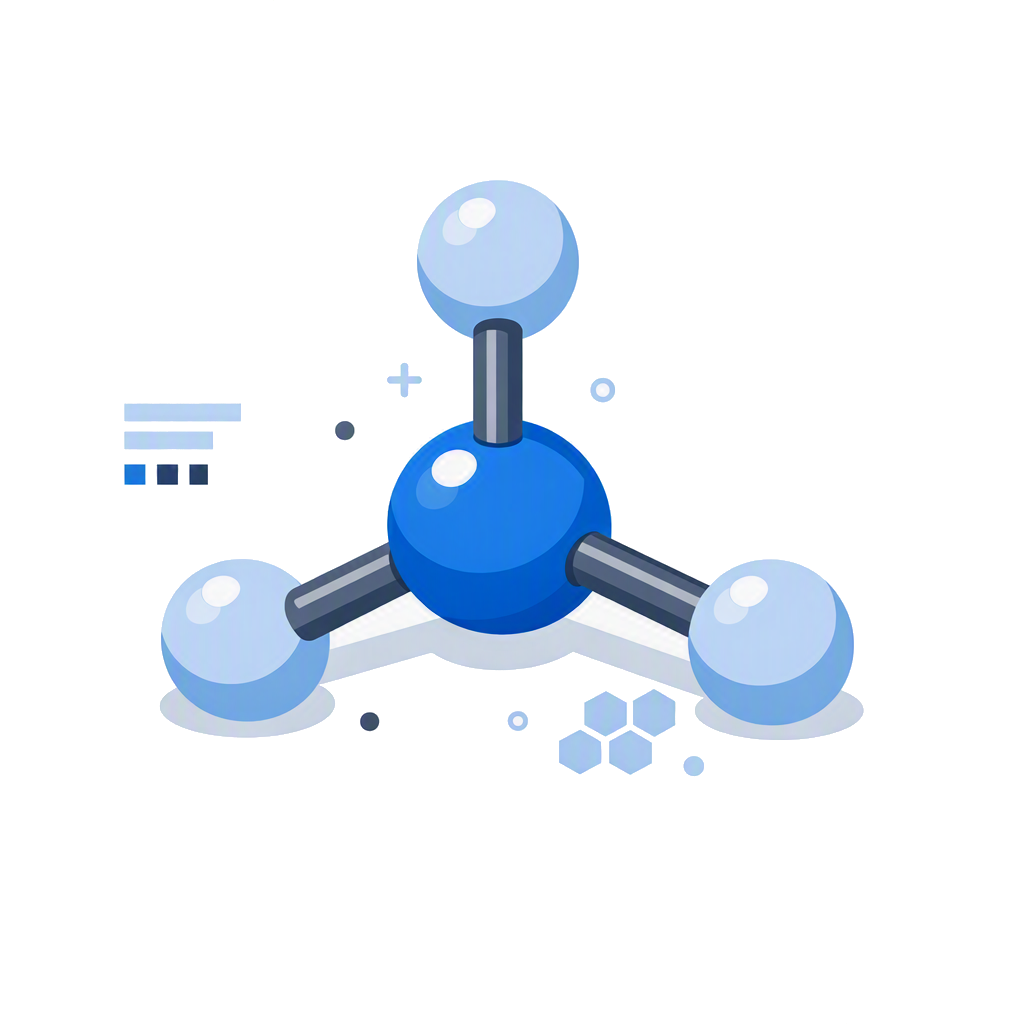
What Is Ammonia?
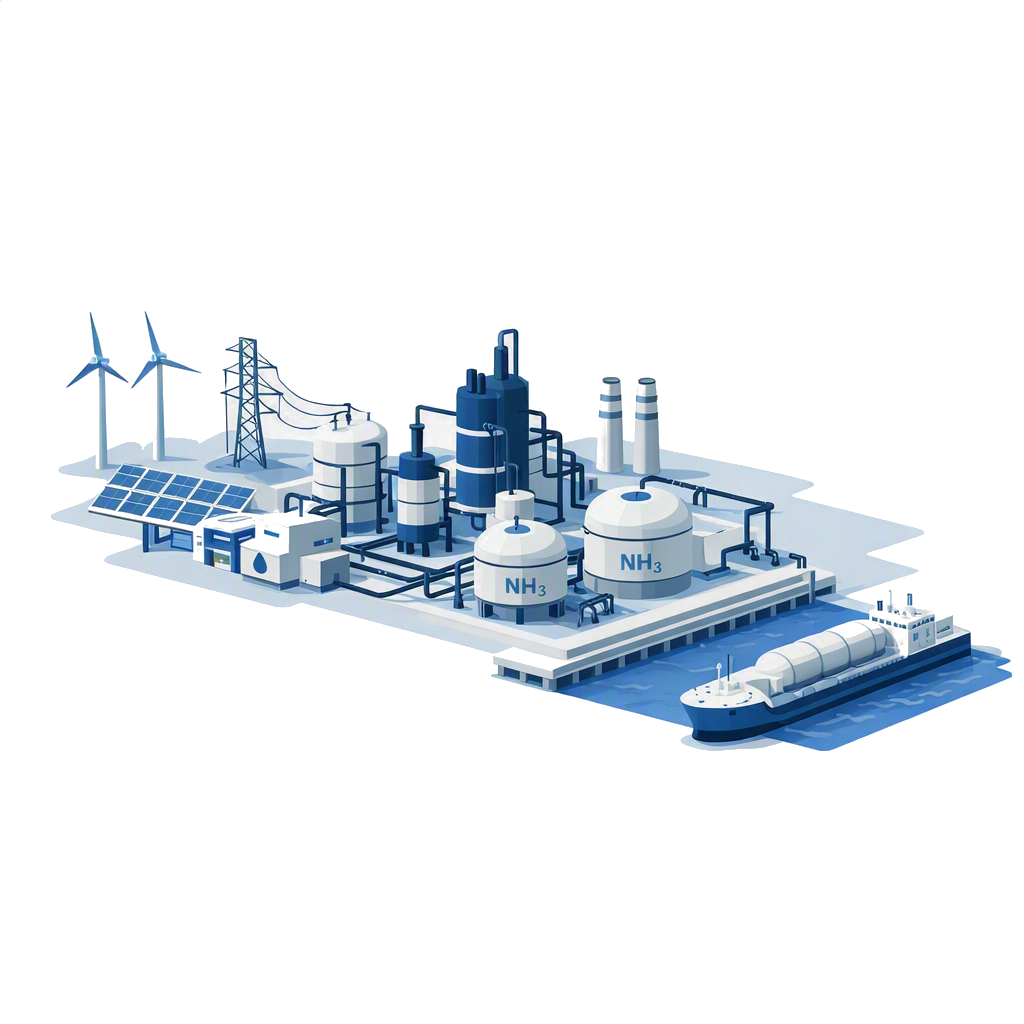
Ammonia consists of nitrogen and hydrogen and can be produced using renewable energy as a carbon-free energy carrier.
Its role as a storage medium and transport solution for hydrogen is of particular interest.
Why Companies Are Investing in Ammonia
Ammonia offers several advantages that make it an attractive future energy carrier:
- High energy density
- Established transport and storage infrastructure from the chemical industry
- Suitable as a hydrogen carrier
- International tradability
- Strong potential for maritime applications
- Important component of future hydrogen markets
More Than Just a Hydrogen Carrier
The use of ammonia places high demands on safety concepts, materials
and material compatibility and technical systems and equipment.
Successful implementation requires detailed investigations into material compatibility,
combustion behavior, emissions formation and process safety.
Our Services
Material Compatibility Studies
Assessment of materials, seals, components, and system interfaces.
Fuel and Media Analysis
Characterization and evaluation of relevant fuel and media properties.
Application Studies
Support for the development and testing of new ammonia-based technologies and applications.
Technical Consulting
Support for innovation projects, pilot applications, and the implementation of ammonia energy systems.

FAQ: Ammonia
Why Is Ammonia Considered a Hydrogen Carrier?
Ammonia contains a high proportion of hydrogen and can be stored and transported relatively easily. This makes it a promising energy carrier for international hydrogen supply chains and future energy systems.
What Advantages Does Ammonia Offer as an Energy Carrier?
Ammonia has a high volumetric energy density and can be transported using existing logistics infrastructure. This gives it significant potential for the global trade of renewable energy.
What Applications Are Being Considered for Ammonia?
In addition to its established use in the chemical industry, ammonia is increasingly being investigated for maritime transport, stationary energy systems, industrial applications and hydrogen transport and storage.
What Technical Challenges Must Be Addressed?
Ammonia places demanding requirements on safety engineering, material selection and system design. Additional considerations include emissions control, combustion performance and process integration.
How Does TEC4FUELS Support Ammonia Projects?
TEC4FUELS supports companies through research and development projects related to ammonia-based energy systems and technologies, material compatibility testing, technical evaluations and application studies.